United States of America

country taxonomy block

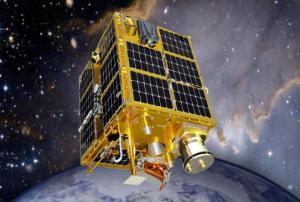
A new report by the international consulting firm Northern Sky Research (NSR) forecasts a boom for nano and microsatellites by 2024, which would lead to a significant diversification of the satellite industry. The report, entitled “Nano and Microsatellite Markets, 2nd Edition”, states that the market for sub-100 kg space artifacts has nearly doubled between 2013 and 2014, and operators have multiplied by three in just five years.

The developers of these nano and microsatellites are mainly universities, start-ups, small government agencies and military forces with low budget and limited time and expertise but who also participate in Earth Observation, science and risk awareness.

However, this sector also faces challenges, as the shortage of affordable launch vehicles, more efficient rideshares and limited orbital diversity. Therefore, the availability of venture capital and support from national agencies will be crucial for securing investment.

more
Publishing date 25/06/2015

The foundation of the Gulf of Mexico Coastal Ocean Observing System (GCOOS) has provided new tools helping to predict storms and enhance ship navigation. Texas, Louisiana, Mississippi, Alabama and Florida will be covered with more accurate information thanks to the GPS Continually Operating Reference Systems (CORS) and Physical Oceanographic Real-Time System (PORTS®) tools that are being implemented through local, state and federal partnerships.

The new CORS provide location data at centimeter-level accuracy, which allows improving the accuracy of coastal mapping, surveying and restoration and flood protection as well as developing better coastal models for hurricanes and flooding.

"This system will help local and regional leaders plan for improved resilience to any impacts of sea level rise or subsidence and coastal storm surge flooding. The project will assist development of long-term strategies to address coastal change impacts along the northern Gulf of…

more
Publishing date 17/06/2015

The National Aeronautics and Space Administration (NASA) and Indian Space Research Organisation (ISRO) are working together on a project to monitor earth changes in high detail.

The project is called NASA-ISRO Synthetic Aperture Radar (Nisar) mission and will be launch into Earth’s orbit in 2020. The mission will study the consequences of climate change by continuously monitoring changes occurring on the Earth’s surface, even ice-sheet movements, said Dr Mylswami Annadurai, director of ISRO's satellite centre in Bengaluru in India.

At the same time the mission is expected to support India’s earthquake early warning system. Therefore India is also developing the Indian Regional Satellite Navigation System (IRNSS), a regional navigation system in order to replace the Global Positioning System (GPS), which is a space-…

more
Publishing date 03/06/2015

The world’s first Emergency Readiness and Response Experience Center has been opened in Washington, D.C., USA by high-tech development company McMurdo.

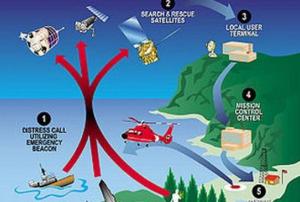
The centre will show the latest innovations and technology developments for search and rescue (SAR), offer real time demonstrations in different scenarios or the possibility to sit at the control of missions. The whole SAR process will be covered in the centre, from distress beacon activation to  emergency response coordination through satellite-based location detection.

Furthermore, this new facility will feature a working MEOSAR (Medium Earth Orbit Search and Rescue) satellite-based search and rescue system, the next generation version of the current Cospas-Sarsat satellite system that will largely influence the existing SAR process with global coverage, near-instantaneous distress beacon detection and a unique Return Link…

more
Publishing date 19/05/2015

The Imaging and Geospatial Technology Forum (IGTF) is took place from 4 to 8 May 2015 in Florida, USA, to present new trends, products and general enhancements related to imaging and geospatial data.  

The conference had already been held in past years but under the name of ASPRS annual conferences. This former denomination referred to the event organizer, the American Society for Photogrammetry and Remote Sensing (ASPRS).

Geospatial information improvements, new trends in remote sensing systems and geological resource applications were some of the main topics to be presented in the IGTF 2015. Within the programme of the conference, the JACIE Workshop highlighted combining a general session and special technical sessions throughout the week and focusing on the synergy of high, medium and low resolution imagery and remote sensing technologies used by the US Government.

Among the participants were international mid- and upper-level imaging and geospatial…

more
Publishing date 06/05/2015

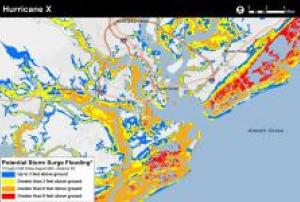
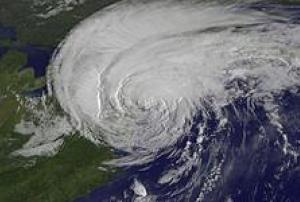
The National Oceanic and Atmospheric Administration (NOAA) is preparing a new application to help people determine at a street-level where water could rise in a storm surge.

This experimental storm surge simulator will let people get a look at what kind of storm surges can take place in their surroundings and which can be the possible damages. The preliminary model is based on Charleston (South Carolina), USA.

"Surveys of the public show there is still a consistent misunderstanding of what the storm surge is, and how deadly it can be. In part this is due to the challenge scientists encounter in trying to simplify the complex physics of hurricanes for the public, and in part this is due to poor misunderstanding of flood zone maps that represent the flooding scenario as it might be viewed from above," reads the introduction to the app, according to

more
Publishing date 13/04/2015

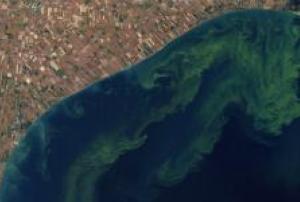
NASA has joined forces with the U.S. Environmental Protection Agency, National Oceanic and Atmospheric Administration and U.S. Geological Survey (USGS) to use ocean color satellite data to develop an early warning indicator for toxic and nuisance algal blooms in freshwater systems and an information distribution system to aid expedient public health advisories.

Algal blooms are a worldwide environmental problem causing human and animal health risks, fish kills, and taste and odor in drinking water. In the United States, the cost of freshwater degraded by harmful algal blooms is estimated at $64 million annually.

Satellites allow for more frequent observations over broader areas than present water sampling. "Observations from space-based instruments are an ideal way to tackle this type of public health hazard because of their global coverage and ability to provide detailed information on material in the water, including algal blooms," said Paula Bontempi of the…

more
Publishing date 09/04/2015

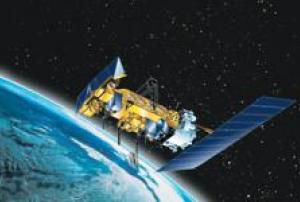
The National Oceanic and Atmospheric Administration (NOAA) reported that its constellation of weather satellites helped save 240 people during 2014 from potentially life-threatening situations throughout the United States and its territorial waters. The statement indicates the importance of satellite-based services as a way to further humanitarian assistance operations when a natural disaster occurs.

Satellites can detect distress signals from emergency beacons carried by downed pilots, shipwrecked boaters, and stranded hikers. Information captured from these satellites, including location, are then relayed to first responders on the ground who assist with search and rescue efforts.Besides the weather satellites, NOAA features polar-orbiting and geostationary satellites that can detect distress signals from emergency warnings carried by downed pilots and shipwrecked boaters, in order to provide location information to facilitate rescue efforts.

NOAA satellites are part…

more
Publishing date 02/02/2015

The United States Geological Survey (USGS) announced that improved global topographic data are now publicly available for most of Asia (India, China, southern Siberia, Japan, Indonesia), Oceania (Australia, New Zealand), and western Pacific Islands.

Elevation data were collected through the Shuttle Radar Topography Mission (SRTM) to deliver precise baseline information that help to better understand the impacts of climate change on specific geographic areas.

The project is the result of the collaborative efforts of the National Aeronautics and Space Administration (NASA) and the National Geospatial-Intelligence Agency (NGA).

The USGS had previously released elevation data for many countries in…

more
Publishing date 27/01/2015

In order to simplify and economize the storage and processing of large-scale raster data, the United States National Geospatial-Intelligence Agency recently made available the new MapReduce Geo (MrGeo) application.

This geospatial toolkit will allow users to benefit from the agency’s collaboration with DigitalGlobe, by decreasing the time needed to search, download, process and format data for analysis.

The main goal is to innovation in the process of storing and analyzing huge amounts of raster data by sharing the open source application with the community and, thereby, accelerating its potential.

Chris Rasmussen, NGA’s public software development lead, stated: “Sharing it with the public gives users at all levels another tool to help solve geospatial problems. For example, first responders could use it to plan the best ways in and out of dangerous areas taking into account terrain, land use, and changes in weather.”

MapReduce Geo will enhance the use of…

more
Publishing date 21/01/2015

Acknowledging that technology can play a key role in enhancing preparedness and raising awareness for natural hazards, the United States White House Office of Science and Technology Police (OSTP) organised the Innovation for Disaster Response and Recovery Initiative Demo Day, featuring disaster-related datasets, tools, and updates.

On this occasion, the portal disaster.data.gov was launched in order to compile open data, tools and other disaster-related resources and make them easily accessible to the public.

The portal includes 114 datasets, from various US organizations, such as the Federal Emergency Management Agency, the National Oceanic and Atmospheric Administration, the National Weather Service and the U.S. Geological Survey.

The resources are divided into six categories, according to the type of disaster, namely: earthquakes, floods, hurricanes, severe winter weather, tornadoes, wildfires.

more
Publishing date 05/01/2015

On 25 November 2014, the Third Hemispheric Meeting of the Inter-American Network for Disaster Mitigation took place at the headquarters of the Organization of American States (OAS) in Washington DC.

The representatives of member states gathered with the purpose of sharing good practices and lessons learnt on the best ways to address the impacts of natural hazards and other emergencies.

The dialogue's theme "Integrating Disaster Risk Management and Adaptation to Climate Change in the Development Agenda" emphasized possibilities for horizontal cooperation and stronger collaboration between the OAS member states, the agencies of the Inter-American Network and the United Nations.

The event was coordinated by the Department of Sustainable Development of the OAS and was divided into three discussions panels, where specialists of risk management, mitigation and prevention phases exchanged opinions and ideas on the topic.

The first panel focused on…

more
Publishing date 27/11/2014

The National Oceanic and Atmospheric Administration (NOAA) will ensure 15.9 million US dollars to a variety of programmes aimed at increasing resilience for coastal communities in the United States.

The NOAA Sea Grant was announced on 8 October 2014 and will involve over 300 Sea Grant projects, which seek to enhance the long-term vitality of coastal communities and their preparedness to natural hazards, severe weather and climate change unheaven consequences.

Among the Sea Grant's diverse activities, some projects will employ real time satellite remote sensing observation of the Center for Remote Sensing (CRS) for coastal ocean observing systems (COOS) as well as high resolution data gathered from the Synthetic Aperture Radar (SAR).

Visit the Sea Grant Projects section of NOOA's website for further information.

more
Publishing date 04/11/2014

CASIS, the nonprofit organization managing research in the U.S. National Laboratory aboard the International Space Station (ISS), has issued a request for proposals in the field of remote sensing until 21 February 2014.

The request specifies: "CASIS is confident that this Request for Proposals will attract both experienced and new-to-space investigators for the development and deployment for testing (for 90 days or less) of sensors or instrumentation for remote sensing or for the utilization of existing hardware for remote sensing on the ISS U.S. National Laboratory. Proposals should seek to use the National Lab for development of sensors and/or use of existing hardware for studies of Earth, Earth’s atmosphere, and astronomy and planetary science with the goal of benefiting…

more
Publishing date 14/01/2014

The theme adopted for the 2015 High-level Political Forum is: Strengthening integration, implementation and review - the HLPF after 2015. 

The High-level Political Forum on sustainable development is the main United Nations platform dealing with sustainable development. It provides political leadership and guidance; follows up and review progress in implementing sustainable development commitments and addresses new and emerging sustainable development challenges; enhances the integration of economic, social and environmental dimensions of sustainable development. 

Disaster management and vulnerability and climate change are among the themes to be addressed during the forum. The links between these topics and sustainable development are strong, natural disasters and climate change will know no boundaries, poor and developing countries, particularly the LDCs, will be among those most adversely affected and least able to cope with the anticipated shocks…

more

Harvard University organizes a workshop called Remote Sensing for Humanitarian Programs from 26-30 June 2017.

It is a professional training course aimed at providing humanitarian professional basic skills required to use remote sensing technologies, such as satellite and drone imagery, as part of humanitarian operations. The goal of the course is to equip participants with the necessary expertise to manage, design, and utilize remote sensing programs during both natural disasters and conflict-related emergencies.The goal is to equip participants with necessary expertise to manage, design and use remote sensing programs both in the cases of natural disasters and conflict-related emergencies.

The course is conducted by the Signal Program on Human Security and Technology, which is a part of the university's Humanitarian Initiative.The faculty is experienced in remote sensing for humanitarian response and has extensive expertise in satellite data analysis.

The fee is…

more

The goal of the Hackaton is to bring together and introduce both non-GEOINT and GEOINT-savvy coders to interesting problems requiring inventive coding solutions. In addition to enabling participation from the non-GEOINT coding world, the end result will be a working code base that performs a specifically requested set of functions or provides answers as outputs.

more

Defense Strategies Institute, in partnership with the SmallSat Alliance, will host a comprehensive two-day summit on how the application of small satellites is transforming the space domain. Together with government, industry and commercial partners this event will present and highlight the technology currently underway and the challenges that exist in enhancing space access and employing SmallSats to ensure space superiority.

The 2nd annual SmallSat & Space Access Summit encourages members of the DoD, Intelligence Community, military services, and critical organizations to come together to discuss solutions and techniques to exploit the space domain.

Topics to be Covered at the 2019 Summit: 

- Assessing the advantages of employing small satellite capabilities to meet operational requirements

- Leveraging small satellites to gather data and enable the effective monitoring of emerging crises

- Operating micro-satellites in low Earth orbit…

more

Text taken from Google's event page:

"Our Geo for Good Summit is an annual conference intended for nonprofits, scientists and other changemakers who want to leverage technology and use mapping tools (such as Google Earth, Earth Engine, Environmental Insights Explorer, and My Maps) for positive impact in the world.

This year, we are planning to return to an in-person format, but with plenty of online, livestream and virtual elements to allow people not there in-person to connect and learn.

When: October 4-6, 2022
Where: Mountain View, CA, USA (with virtual events too!)

The application deadline to attend the summit in person has already passed, but you can still attend virtually. If you already submitted an application to attend in person, you will be notified of your application decision by July 20, 2022.

If you have any questions, please reach out to…

more

The summit will help to find out more about the planned retirement of the North American Datum of 1983 (NAD 83) and the North American Vertical Datum of 1988 (NAVD 88), how this will impact the mapping work, and what tools are planned to ease the transition to new, more accurate datums.

This event will be part of a larger conference organized by the National Society of Professional Surveyors (NSPS) and in partnership with the Management Association for Private Photogrammetric Surveyors (MAPPS). There will be no cost for NGS sessions, but registration is required and space is limited.

This course is the first professional training course with the aim of providing humanitarian professionals basic skills and knowledge required to use remote sensing technologies, such as satellite and drone imagery, as part of humanitarian operations. The goal of the course is to equip participants with the necessary expertise to manage, design, and utilize remote sensing programs during both natural disasters and conflict-related emergencies.

The Remote Sensing Workshop for Humanitarian Response is a five-day training conducted by the Signal Program on Human Security and Technology at the Harvard Humanitarian Initiative. The course faculty is experienced in remote sensing for humanitarian response, and has extensive expertise in analyzing data from both satellites and from unmanned aerial vehicles (UAVs) in real-world-situations. 

Course Objectives

At the end of this course the participant will be able to:

more

The International Conference of Crisis Mappers (ICCM) is the leading humanitarian technology event of the year, bringing together the most important humanitarian, human rights, development and media organizations with the world's best technology companies, software developers and academics. As thus one of the few neutral spaces where such important conversations can take place, the annual ICCM conference brings together a wide range of diverse actors for important conversations that lead to concrete new projects and deliverables across a variety of diverse domains. As a community of practice, the ICCM thus helps facilitate new projects and catalyzes innovation in the area of humanitarian technology.

The theme for this year's event, Affected Communities in Spotlight, will focus on better engaging and understanding populations as the primary referent during a disaster.

more

This conference merges up to three unique satellite conferences into one major event. It has been the practice of the American Meteorological Society (AMS) Satellite Meteorology, Oceanography, and Climatology (SatMetOC) Committee (organizers of the 23rd AMS Satellite Meteorology, Oceanography and Climatology Conference) and the European Organisation for the Exploitation of Meteorological Satellites (EUMETSAT; organizers of the 2019 EUMETSAT Meteorological Satellite Conference) to hold joint conferences approximately every six years, most recently in Vienna (2013), and previously in Amsterdam (2007) and Paris (1998).

Major areas of interest: 
  1. New Satellite Systems and Instrumentation—illustrating the potential of new satellite systems to improve weather, climate, and other environmental data products; enhance user application and services, and contribute to blended and fused satellite datasets; future observing system architectures, flight projects,…

more

Consists of:

  • Heat & Fire Expo
    • "The Heat & Fire USA is the leading wildfire prep, management, and recovery event, showcasing the latest tools, strategies, and insights among investment and global industry leaders."
  • Earthquake Expo
    • "The Earthquake Expo USA is the leading seismic prep, management, and recovery event, showcasing the latest tools, strategies, and insights among investment and global industry leaders."
  • Flood Expo
    • "The Flood Expo USA is the leading flood prep, management, and recovery event, showcasing the latest tools, strategies, and insights among investment and global industry leaders."
more

The Open Geospatial Consortium (OGC®) invites attendance at the June 2015 OGC Technical Committee Meeting be held at UCAR/NCAR Center Green in Boulder, Colorado 1 June to 5 June, 2015. In addition to a rich agenda of Working Group meetings and special events, there will be a dinner reception and Gardels Award announcement on Wednesday evening at the NCAR/UCAR Mesa Laboratory.

The week’s special events include the final OGC Testbed 11 Demonstration plus: a Point Cloud Ad Hoc meeting, a Geospatial/BIM/Indoor Location Workshop (“GIS BIM” in the TC agenda), a Water Data Summit, and a GeoSemantics Summit. 

OGC Domain Working Groups…

more