

UN-SPIDER Contributes to International Dialogue on Satellite Data for Peace and Humanitarian Action at the Vatican
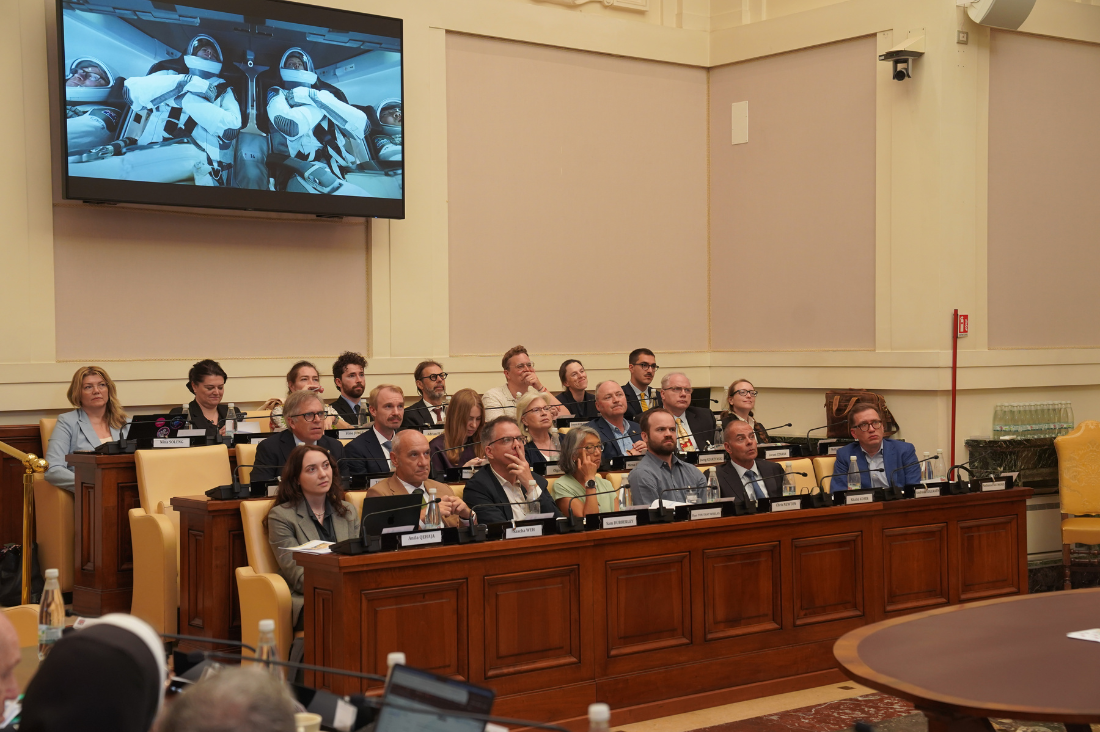
From 23–25 June 2026, UN-SPIDER participated in the Satellites for Peace: An Idea Whose Time Has Come conference at the Pontifical Academy of Social Sciences in Vatican City. Bringing together representatives from the United Nations, governments, humanitarian organizations, the private sector, academia and research institutions, the conference explored how satellite-based information can better support peace-building, humanitarian action and conflict prevention.
Co-organized by the Institute for Economics and Peace (IEP), Kongsberg Satellite Services (KSAT) and the Peace Research Institute Oslo (PRIO), amongst others, the conference provided a platform to discuss the growing importance of Earth observation for humanitarian operations and peace efforts in fragile and conflict-affected settings. UNOOSA contributed to these discussions through UN-SPIDER and the Space Applications Section by sharing both strategic and operational perspectives on improving access to very high-resolution (VHR) satellite imagery for humanitarian and development purposes.
Conference Background
The conference was organized in response to the growing recognition that satellite-based Earth Observation has become an indispensable tool for addressing some of the world's most pressing humanitarian and development challenges. Satellite imagery supports a wide range of civilian applications, including monitoring agriculture, climate change, water resources, urbanization and environmental degradation. In fragile and conflict-affected areas, remote sensing provides timely and reliable information that is often impossible to collect safely on the ground.
The conference was convened in response to the increasing demand for reliable, high-resolution satellite imagery to support humanitarian action and peace-building. While global sharing of satellite imagery has advanced significantly in recent decades, access to Very High Resolution (VHR) imagery—offering resolutions of less than 50 centimetres—remains largely driven by military demand. This limits the ability of humanitarian organizations to access the data they need to document crises, support vulnerable populations and respond effectively to emergencies. Against a backdrop of increasing humanitarian needs and a growing number of conflicts worldwide, participants discussed how stronger cooperation between governments, international organizations, the private sector, and the scientific community could help improve equitable access to satellite imagery and analysis for humanitarian, peace and development purposes.
Throughout the conference, participants examined how satellite-based Earth Observation can strengthen peace and humanitarian action by supporting the monitoring of ceasefires and compliance with international humanitarian law, damage assessments, early-warning systems, crisis response, and post-conflict stabilization. Discussions focused on assessing the current state of satellite-based Earth Observation for humanitarian needs and exploring how governments, international organizations and commercial satellite providers can strengthen commitments to improve access to VHR imagery and related analysis.
UNOOSA and UN-SPIDER Contributions
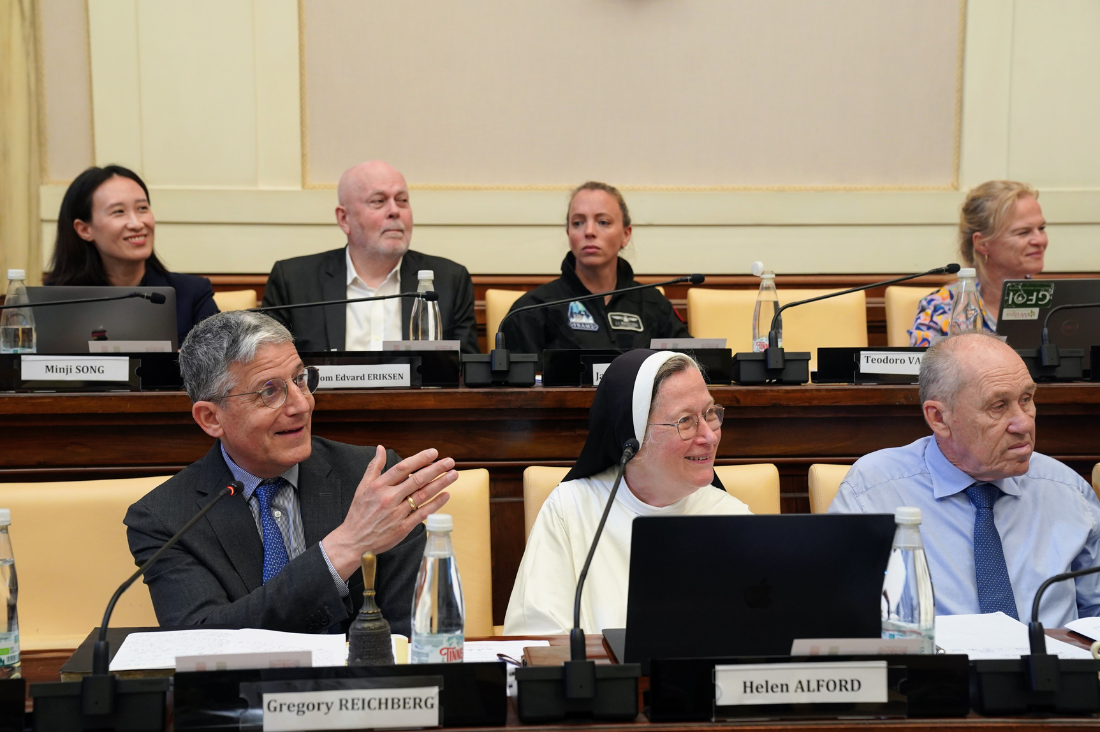
At the conference, Lóránt Czárán, Chief of UNOOSA's Space Applications Section, and Joerg Szarzynski, Head of the UN-SPIDER Bonn Office, represented UNOOSA by bringing both strategic and operational perspectives to the discussion on access to very high-resolution satellite imagery for peace, humanitarian action and crisis response.
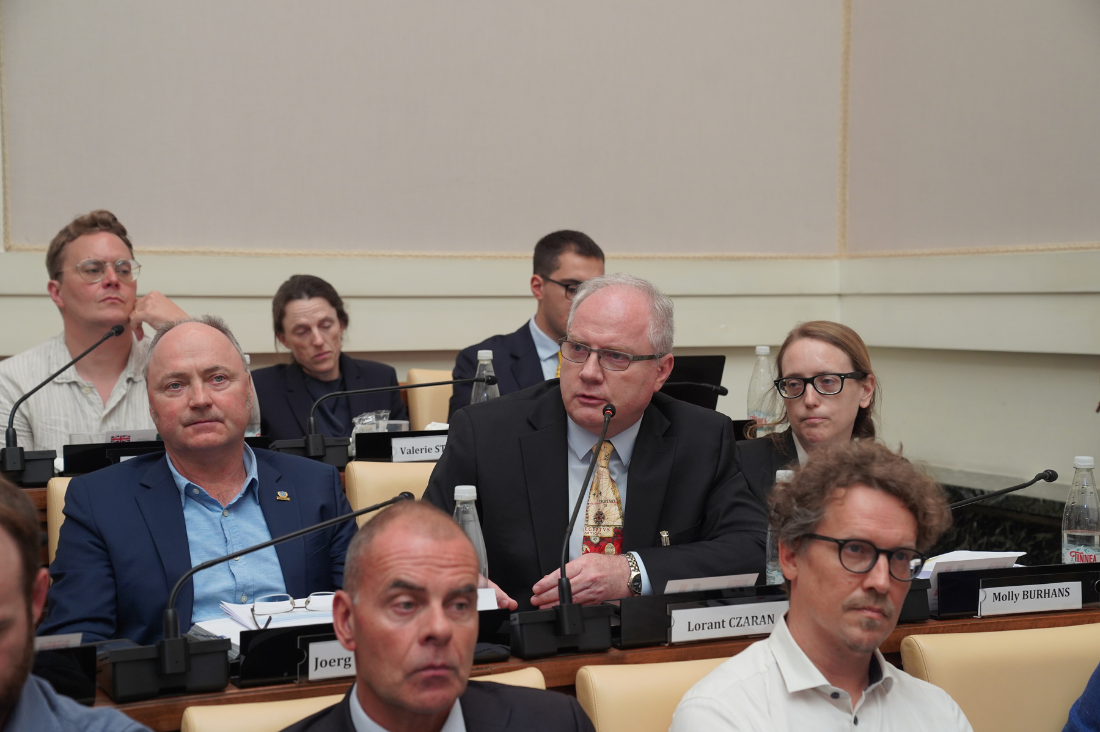
Lóránt Czárán contributed to 'Session 5: Obstacles to VHR Access', where UNOOSA was invited to provide insights into the institutional and practical challenges surrounding access to satellite data and analysis for international peace, development and humanitarian efforts. His contribution focused on the challenges related to accessing VHR imagery and analysis for international peace, development and humanitarian efforts.
Joerg Szarzynski participated in the concluding strategic discussion, 'Towards a Satellites for Peace Alliance', which explored whether the world needs such an alliance and what role United Nations entities could play in supporting it. Drawing on UNOOSA's mandate and UN-SPIDER's operational experience, his contribution highlighted the importance of neutral, trusted and internationally coordinated access to space-based information for fragile and conflict-affected settings.
During the discussions, UNOOSA expressed its clear and positive interest in continuing to support the establishment of a Satellites for Peace Alliance, particularly where such an initiative can strengthen equitable access to space-based data and analysis for humanitarian, peace and development purposes.
Key Takeaways
A central theme throughout the conference was the growing convergence between the needs of humanitarian organizations, policymakers, researchers, and the private sector. While perspectives and priorities differ, participants emphasized that stronger collaboration is essential to ensure that space-based information is translated into practical solutions for those who need it most.
The discussions also reinforced the importance of improving access not only to satellite imagery itself, but also to the analysis and derived products that enable informed decision-making. Trusted international cooperation and partnerships across sectors were identified as essential for overcoming existing barriers to access and ensuring that humanitarian actors can make greater use of space-based information in their operations.
For UN-SPIDER, these discussions closely align with its mandate. The programme continues to work with partners across the space and humanitarian communities to improve access to very high-resolution Earth Observation data and derived products, helping make satellite information more accessible, affordable and actionable for the United Nations system and countries in support of disaster risk reduction, emergency response and resilience-building.
Looking Ahead
The conference concluded with a shared interest in continuing discussions on mechanisms that can improve access to satellite data for humanitarian and peace-building purposes, including the possible establishment of a Satellites for Peace Alliance.
UN-SPIDER welcomes these ongoing efforts and looks forward to continuing its collaboration with partners across the United Nations system, governments, research institutions, and the private sector. By strengthening partnerships and promoting equitable access to space-based information, UN-SPIDER aims to help ensure that satellite technologies continue to support informed decision-making and deliver tangible benefits for disaster risk reduction, humanitarian action and resilience-building.
UN-SPIDER extends its appreciation to Gregory Reichberg, Steve Killelea, Henrik Syse, Maja-Stina Ekstedt, the Peace Research Institute Oslo (PRIO), UNDP, KSAT and the entire organizing team for bringing together such a diverse and inspiring group of participants and creating a platform for these important discussions.
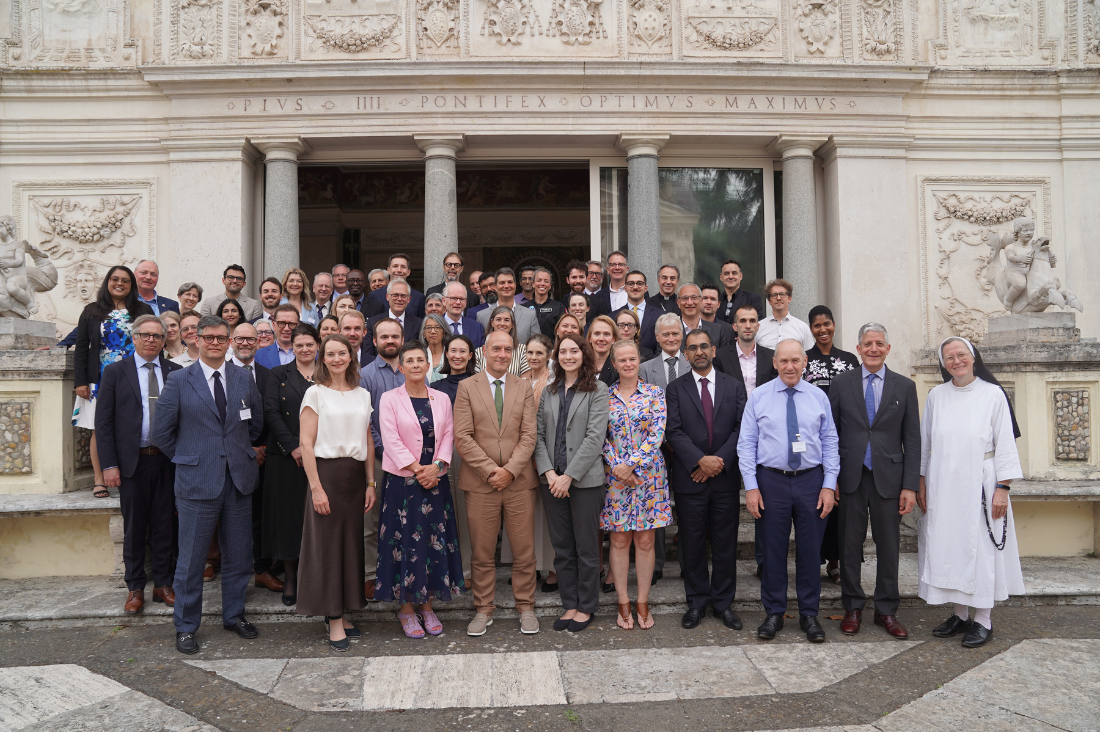
Picture Credits: Gabriella C. Marino/PASS
Event Website: https://www.pass.va/en/events/2026/satellites.html
Conference Booklet (including the schedule and speakers): https://www.pass.va/content/dam/casinapioiv/pass/pdf-booklet/booklet_satellites.pdf
