Zambia

country taxonomy block

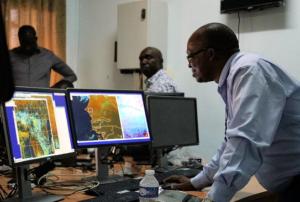
Scientists have been awarded £2 million to develop ways of alerting communities in South Africa, Zambia, and Mozambique to extreme weather. The project, a collaboration between researchers at the University of Leeds and the National Centre for Atmospheric Science, will focus on providing effective warnings to vulnerable communities that are more likely to be impacted by extreme weather. This includes people living in informal settlements close to rivers and those with disabilities who require early warnings to protect themselves and their property.

Severe storms in Southern Africa pose a risk to hundreds of thousands of people every year. In 2022, it was estimated that over 15,000 people were affected by floods in Zambia, and in April of the same year, more than 400 people were killed by floods in Durban, South Africa. Furthermore, around 200,000 families were displaced during Mozambique's last rain season. Intense rainfall events are expected to increase in the coming...

more
Publishing date 01/04/2023

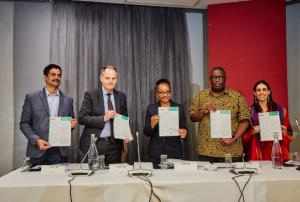
Zambia is a drought-prone country that experiences droughts every 4 to 5 years. This frequency is projected to increase due to climate change. The inadequate infrastructure together with the rural and poor population makes the country highly vulnerable to droughts. However, Zambia is now better prepared to cope with droughts’ impacts thanks to a new satellite-based online weather-monitoring system, the Zambia Drouth Monitoring System (ZADMS), that was launched on 20 February in Lusaka, Zambia. The ZADMS, developed by the International Water Management Institute (IWMI) for Zambia’s Ministry of Agriculture, is part of the CGIAR Initiative on Climate Resilience (ClimBeR) and the program...

more
Publishing date 02/03/2023

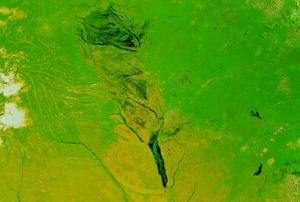
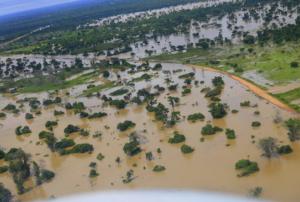
Southern and Central provinces in Zambia are underwater after long-term rainfall starting 11 January, causing overflowing rivers. The floods, reported as “catastrophic” by Zambia’s Disaster Management and Mitigation Unit, have caused widespread damage to homes, farmland, and livestock. The floods have also left numerous communities isolated and sanitation facilities completely submerged, exposing the population to a high risk of waterborne diseases.

The International Water Management Institute (IWMI) has offered its support in developing a post-flood recovery strategy and strengthening digital climate agro-advisory services in Zambia.

Spokespersons at IWMI expressed the importance of enhancing emergency preparedness and response capacities to mitigate the impact of climate shocks. Furthermore, IWMI’s representatives also stressed...

more
Publishing date 01/03/2023

The Regional Centre for Mapping of Resources for Development (RCMRD), UN-SPIDER’s Regional Support Office, conducted a flood forecasting training in Uganda from 7 to 10 July and a technical training to support the National Spatial Data Infrastructure (NSDI) in Zambia from 8 to 11 July.

During the flood forecasting training in Uganda, RCMRD collaborated with the Directorate of Water Resource Management from the Ministry of Water and Environment of Uganda and other stakeholders to develop and implement CREST (Coupled Routing and Excess Storage) in different areas in Uganda with the support of the SERVIR program.

The workshop addressed issues concerning requirements and implementation of the CREST model and how to empower stakeholders.

The technical training conducted in Zambia to support the National Spatial Data Infrastructure (NSDI), brought together representatives of 12 institutions including government ministries and departments, parastatals and academic...

more
Publishing date 22/07/2015

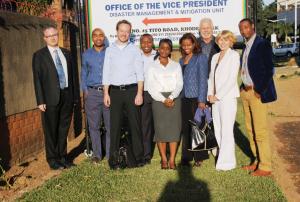
UN-SPIDER and its team of experts carried out a Technical Advisory Mission (TAM) to Zambia from 26 to 30 May 2014. The TAM was conducted upon invitation of the Office of the Vice-President, Disaster Management and Mitigation Unit (DMMU).

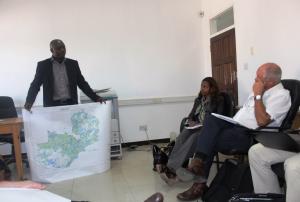
The team met with about 15 key stakeholder agencies in the country including the Survey Department, the Meteorological Service or the National Remote Sensing Centre. The experts took stock of issues such as policy gaps, availability of satellite data and geospatial information for all relevant institutions, the current use of space-based information in the country, and data sharing practice. The team also looked at challenges and constraints, existing capacity and further training needs, established institutional linkages and ways to strengthen disaster risk reduction and emergency response at the country level.

As a first follow up of the TAM, information was shared on data collection and very high resolution data acquisition options,...

more
Publishing date 01/07/2014

At the invitation of the Government of Zambia, the UN-SPIDER Programme will conduct a Technical Advisory Mission (TAM) to Zambia from 26 to 30 May 2014. UN-SPIDER is currently seeking international experts from the space, disaster management and disaster risk management communities who would like to volunteer for participating in this TAM. If required, UN-SPIDER will sponsor the travel and the stay of the expert to Zambia. UN-SPIDER's partner during this TAM is the Disaster Management and Mitigation Unit in the Office of the Vice President of the Republic of Zambia.

UN-SPIDER is looking for four to six experts from outside of Zambia. They should have an expertise in various areas of disaster preparedness as well as the use of space technology, such as disaster response, spatial data infrastructure or policy analysis. Preference will be given to experts who are either already collaborating or who are willing to collaborate with the authorities or relevant institutions in...

more
Publishing date 31/03/2014

Disaster management and mitigation unit

Contact person:

Mr. Dominiciano Mulenga

tel: +260 211 253 123
fax: +260 211 253 123
fax:+260 211 255 725
Mail: mdominiciano [at] yahoo.com

Mr. Anderson Banda

tel:+260 211 252 692
fax:+260 211 255 725
Mail: andybanda [at] hotmail.com