
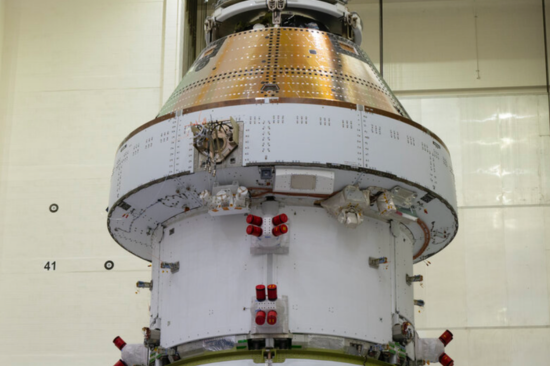
Last week, NASA launched its Space Launch System rocket from Kennedy Space Center in Florida, carrying four astronauts aboard the Orion spacecraft as part of the Artemis II mission. A central component of the mission is ESA’s European Service Module, which provides propulsion, electrical power, and life-support functions for the spacecraft and its crew during their journey around the Moon and back to Earth.
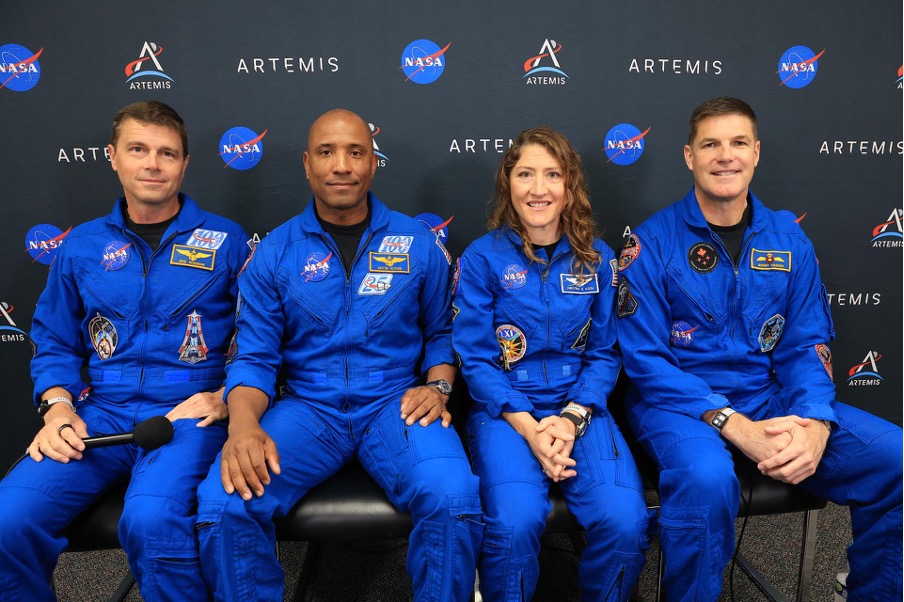
Artemis II marks the first time astronauts are flying aboard Orion and builds on the Artemis I mission. During the 10-day mission, NASA astronauts Reid Wiseman, Victor Glover and Christina Koch, together with Canadian Space Agency astronaut Jeremy Hansen, are travelling around the Moon and finally return safely to Earth. This is the first crewed mission of this kind since Apollo 17 in 1972.
The Role of the European Service Module
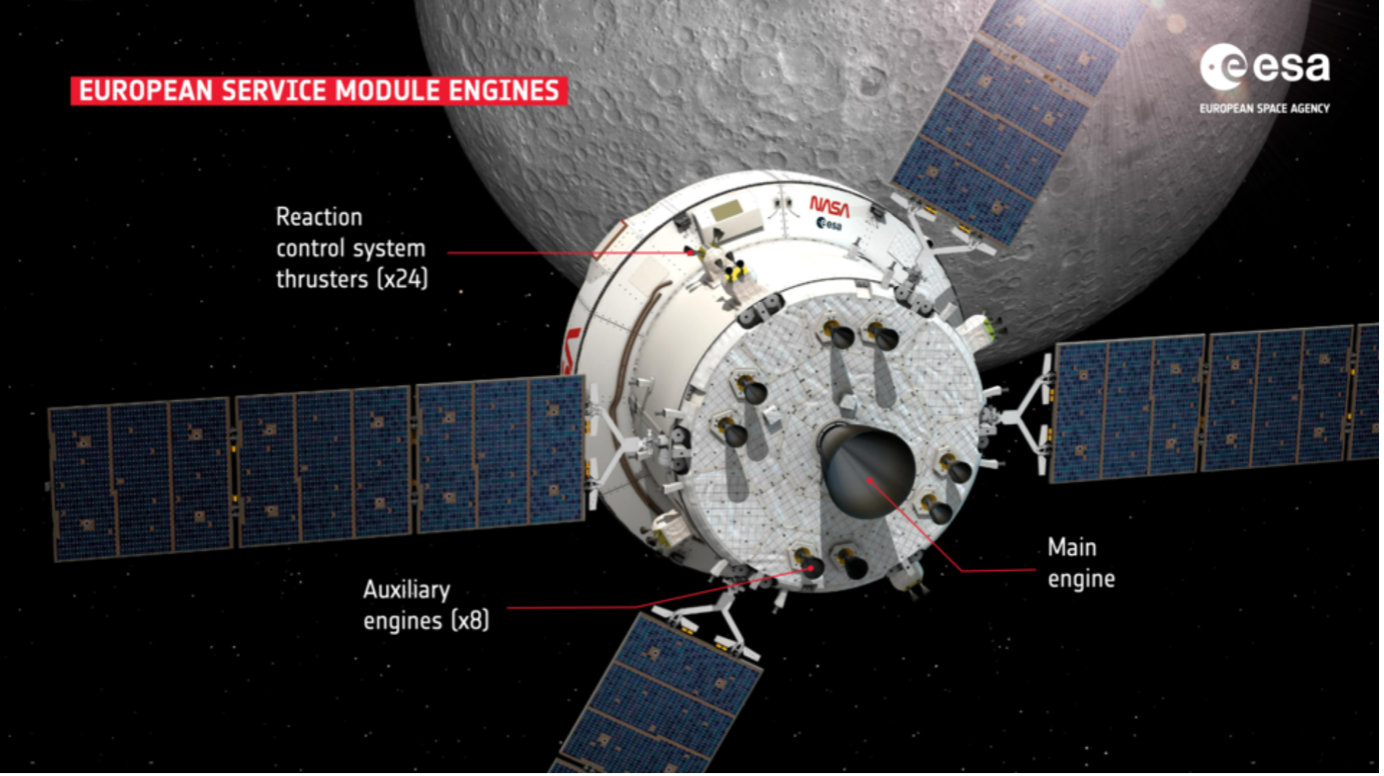
The European Service Module plays a key role in supporting the Orion spacecraft throughout the mission. It supplies essential resources, including power, propulsion, air, water, and temperature regulation required for crewed spaceflight. Its four solar arrays, each extending to seven metres, generate the electricity needed to operate onboard systems.
The propulsion system includes one main engine for major manoeuvres, complemented by auxiliary engines for orbital adjustments, as well as smaller reaction control system engines that enable precise control of the spacecraft’s orientation and position. The main engine, previously used during Space Shuttle missions between 2000 and 2002, has been refurbished and integrated into Orion for use in the Artemis programme.
Mission Profile and Key Phases
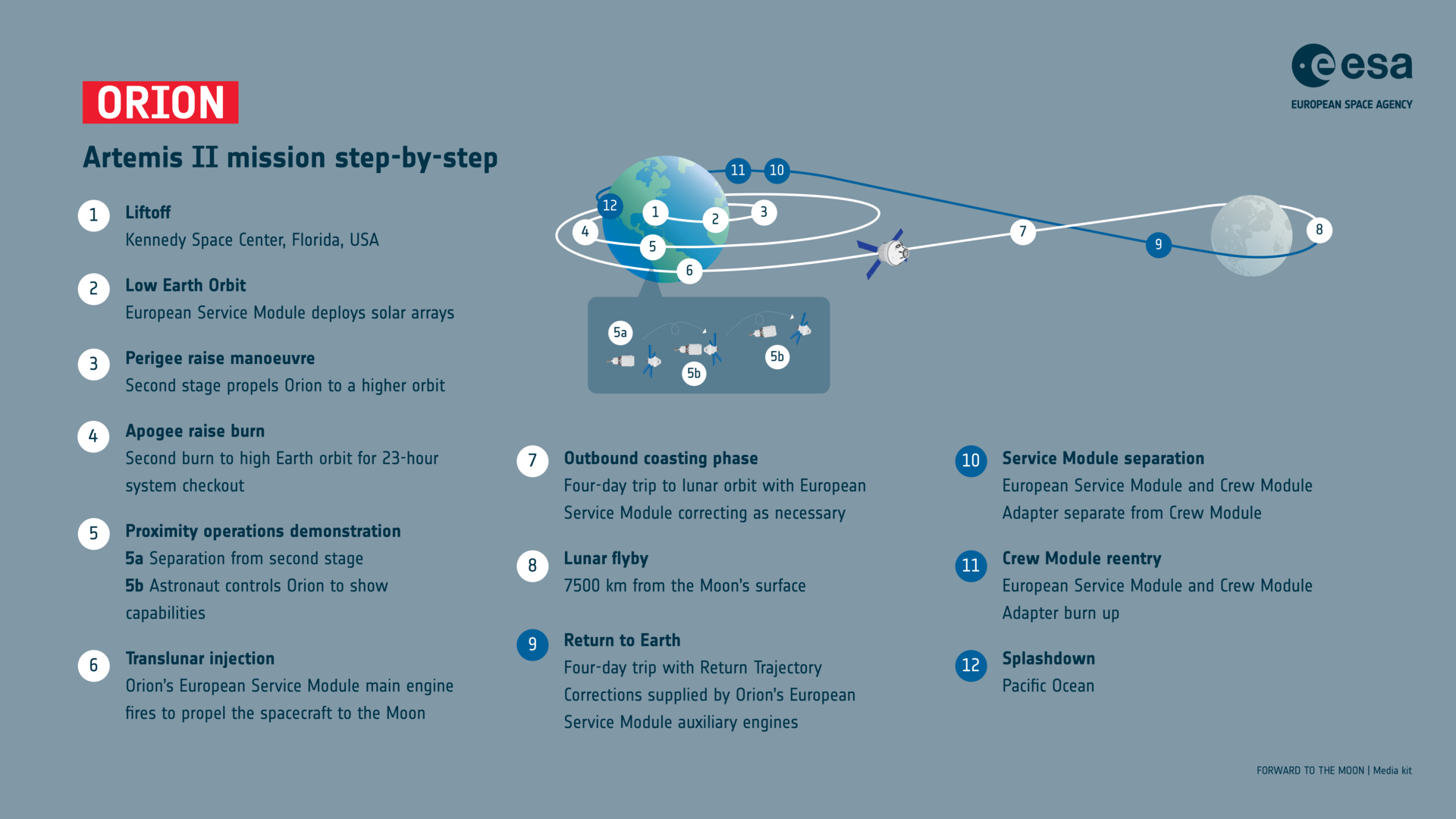
In the early phase of the mission, the European-built solar arrays deploy to begin supplying electricity to the spacecraft. The crew then enters Earth orbit, where they carry out system checks and take manual control of Orion to practise manoeuvres using the reaction control system engines. These operations include proximity manoeuvres that are required for future mission activities.
During the following day, the European Service Module’s main engine performs the trans-lunar injection burn, accelerating Orion out of Earth orbit and placing the spacecraft on a four-day trajectory towards the Moon. Throughout the mission, additional engine firings are carried out to adjust the spacecraft’s path and maintain its planned course. After travelling around the Moon, Orion returns to Earth. As the spacecraft approaches the planet, the European Service Module separates from the crew module and burns up during atmospheric re-entry. The mission ends with the crew module landing in the Pacific Ocean.
European Contribution and Industrial Collaboration
The European Service Module has been developed through a large-scale industrial collaboration spanning multiple years. Contributions have come from across 10 European countries, involving around 20 main contractors and more than 100 suppliers. The module’s structure was developed by Thales Alenia Space in Turin, Italy, while overall integration was carried out by Airbus in Bremen, Germany. European involvement continues throughout the mission, with engineers supporting operations and monitoring spacecraft systems. Teams based at ESA’s technical centre in the Netherlands, the European Astronaut Centre in Germany, and NASA’s Johnson Space Center in Houston provide continuous oversight of the European-built components.
Supporting Future Exploration Missions
Artemis II is the second mission to use a European Service Module, following its performance during the uncrewed Artemis I mission. During this mission, the module supports activities such as system verification and in-orbit manoeuvres that are necessary for future exploration objectives.
During the initial phase in orbit, the crew conducts system checks and operates the spacecraft manually to demonstrate manoeuvring capabilities. These operations are relevant for future Artemis missions, including tasks related to the positioning of Gateway elements such as ESA’s Lunar I-Hab module.
The mission continues to test the performance of the Orion spacecraft and its European Service Module, now equipped with systems designed to support astronauts during flight beyond Earth orbit.
Artemis II as a Step Towards More Inclusive Space Exploration
From the perspective of UN-SPIDER, the Artemis II mission is not only celebrated in terms of spacecraft missions but also represents a critical milestone in more inclusive space exploration. With a diverse and international crew consisting of the first person of colour, the first woman, and the first Canadian to travel into cislunar space, this journey is a step towards more representative, inclusive and global space missions.
The Bigger Picture for Disaster Management
Although not particularly highlighted for the Artemis II mission, ESA’s 2040 Strategy includes objectives to develop space solutions that contribute to disaster management. Acknowledging that natural and human-made hazards are increasing in magnitude and complexity, ESA plans to enhance its emergency response capacities through space solutions.
Read the original articles from the ESA website here: https://www.esa.int/Science_Exploration/Human_and_Robotic_Exploration/Artemis_II_mission_begins & https://www.esa.int/Science_Exploration/Human_and_Robotic_Exploration/European_Service_Module_engines_powering_Artemis_II & https://www.esa.int/Science_Exploration/Human_and_Robotic_Exploration/Orion/Artemis_II & https://esamultimedia.esa.int/docs/corporate/ESA_strategy_2040_inFocus.pdf
