El Salvador

country taxonomy block

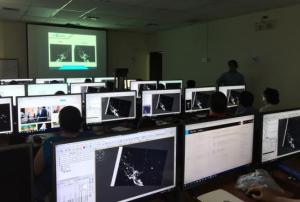
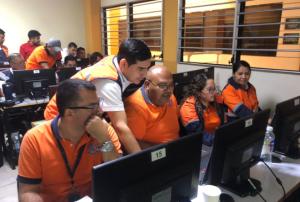
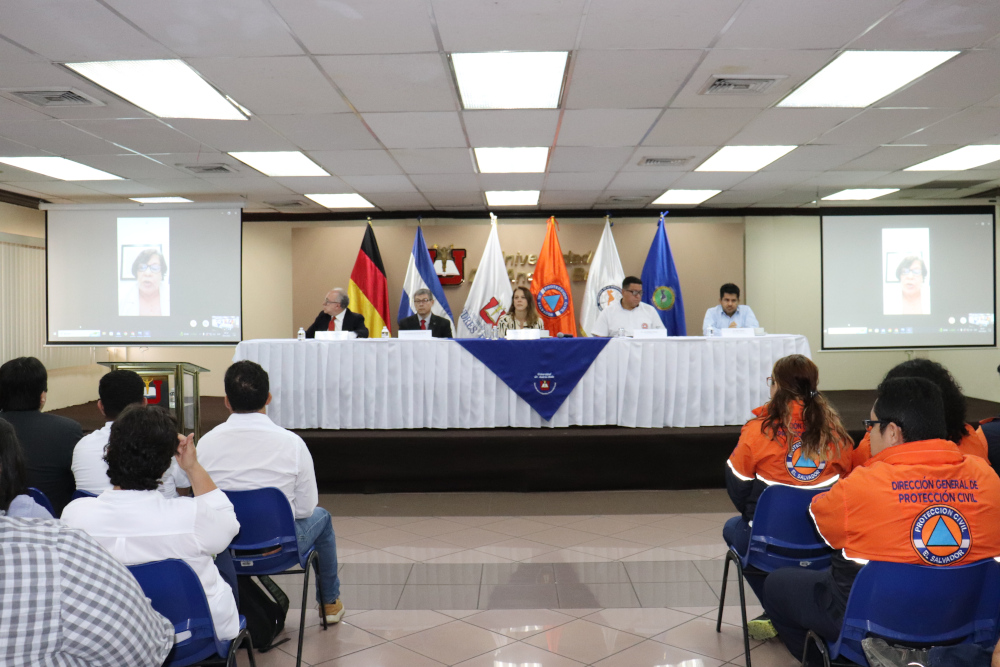
The second phase of the UN-SPIDER/GIZ/AEM/DPC training course took place on the premises of the Andres Bello University in San Salvador from 10 to 14 July 2023 and with this, the training course was successfully concluded.

Benefitting from the presence of the expert from the Mexican Space Agency (AEM), participants from the Civil Protection Directorate, other government agencies, and faculty members of several universities of El Salvador enhanced their skills in the use of radar imagery to map the geographical extent of floods and other features which can be extracted with this type of imagery.

Taking into consideration the annual hurricane season which starts every year in June, the training course allowed staff in the Directorate of Civil Protection, the Observatory of Hazards and Natural Resources (MARN) and other government agencies to map the extent of floods that may be triggered by such hurricanes and tropical storms that may impact this country in Central…

more
Publishing date 13/07/2023

Like many other countries of the world, El Salvador faces the frequent impact of floods triggered by tropical storms and hurricanes. Since 2014, UN-SPIDER has been providing advisory support to the Directorate of Civil Protection of El Salvador and other government agencies on the use of space technologies and space-based information to confront the challenges of floods and other natural training courses.

At the request of the Civil Protection Directorate of El Salvador (DPC), UN-SPIDER, the German Agency for International Cooperation (GIZ) and the Mexican Space Agency have joined forces to organize a training course on the use of radar imagery to map the geographical extent of floods.

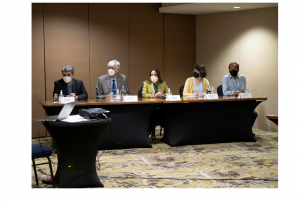
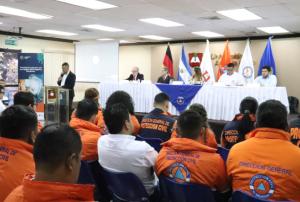
Workshop opening remarks
more
Publishing date 30/05/2023

Como muchos otros países del mundo, El Salvador se enfrenta al impacto frecuente de las inundaciones provocadas por tormentas tropicales y huracanes. Desde 2014, ONU-SPIDER ha estado proporcionando asesoramiento técnico a la Dirección de Protección Civil de El Salvador y otros organismos gubernamentales sobre el uso de las tecnologías espaciales y la información obtenida desde el espacio para hacer frente a los desafíos de las inundaciones y otras formaciones naturales.

A petición de la Dirección de Protección Civil de El Salvador (DPC), ONU-SPIDER, la Agencia Alemana para la Cooperación Internacional (GIZ) y la Agencia Espacial Mexicana se han unido para organizar un curso de capacitación sobre el uso de imágenes de radar para cartografiar la extensión geográfica de las inundaciones.

more
Publishing date 30/05/2023

To facilitate the activation of the International Charter Space and Major Disasters in Central America, Mexico and Dominican Republic, UN-SPIDER, the Central American Coordination Centre for Natural Disaster Prevention (CEPREDENAC) and the International Charter Space and Major Disasters organized a regional training course in Guatemala City, Guatemala, from 30 November to 02 December 2021.   Experts from the National Commission on Space Activities of Argentina (CONAE), National Space Research Institute of Brazil (INPE), and the United States Geological Survey (USGS) made participants aware of the procedures used by the International Charter in case of activations, and on the procedures and guidelines that project managers designated by the International Charter must follow when designated as project managers in case of activations. In addition, an expert from the Federal University of Santa Maria of Brazil (UFSM), in its role as a UN-SPIDER Regional Support Office,…

more
Publishing date 11/12/2021

ONU-SPIDER, la Carta Internacional Espacio y Grandes Desastres, el Centro de Coordinación para la Prevención de Desastres Naturales en América Central y República Dominicana (CEPREDENAC) y la Universidad Federal de Santa María de Brasil (UFSM) organizaron un curso de entrenamiento para facilitar la activación de la Carta Internacional Espacio y Grandes Desastres en México, América Central y República Dominicana, Dicho curso se llevó a cabo en Ciudad Guatemala del 30 de noviembre al 2 de diciembre del 2021.  El curso fue brindado por expertos de la Comisión Nacional de Actividades Espaciales de Argentina (CONAE), el Instituto Nacional de Investigaciones Espaciales de Brasil (INPE), el Servicio Geológico de los Estados Unidos (USGS) y UFSM. Los expertos  describireron el proceso que utiliza la Carta Internacional en caso de activaciones y los procedimientos y lineamientos que deben seguir los gerentes de proyecto que son designados por la Carta Internacional en caso de…

more
Publishing date 11/12/2021
Regional Support Offices mentioned:

El Salvador is exposed to hydro-meteorological and geophysical hazards and has a history of destructive earthquakes, volcanic eruptions, tropical storms, and droughts. In order to increase the capacity of the inter-institutional technical team headed by the Directorate of Civil Protection of El Salvador (DGPC) on the use remote sensing techniques to generate geospatial information to address these hazards, UN-SPIDER and DGCP conducted a week-long training course. The training was held from 24 to 28 July 2017 at the GIS Laboratory of the Faculty of Agriculture of University of El Salvador, San Salvador. Experts from the Agustin Codazzi Geographic Institute (IGAC, in its role as one of the UN-SPIDER Regional Support Offices) and of the Federal University of Santa Maria in Santa Maria, Rio Sul, Brazil, conducted the training course. During the week-long training, 20 members of the inter-institutional technical team were trained on how to use remote sensing techniques and UN-SPIDER…

more
Publishing date 28/07/2017

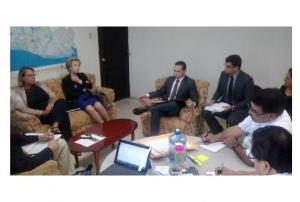
UN-SPIDER conducted an expert mission to El Salvador from 12 to 15 July 2016.  The mission included an official visit by Ms. Simonetta Di Pippo, Director of UNOOSA, to El Salvador.   This official visit was arranged by the Ministry of Foreign Affairs as a follow-up to the recent incorporation of El Salvador as a member of the Committee on the Peaceful Uses of Outer Space.  

The opportunity was used by UN-SPIDER to meet with staff from the Civil Protection Directorate and of the Environmental Observatory to discuss the on-going process to establish an inter-institutional team in El Salvador that could be involved in the generation of geospatial information combining satellite imagery and in-situ data. 

As in the case of Guatemala, UN-SPIDER staff took the opportunity to provide to the Civil Protection Directorate and the Environmental Observatory a series…

more
Publishing date 19/07/2016

On 9 and 10 July 2015, UN-SPIDER conducted an Expert Mission to El Salvador under the coordination of the Ministry of Foreign Affairs of El Salvador as a follow-up to the Technical Advisory Mission (TAM) which was conducted in April 2014. The Expert Mission included several meetings with representatives of the Ministries of Foreign Affairs, Environment and Natural Resources, Public Works, Public Health, and Interior. The mission was used to discuss the recommendations proposed by UN-SPIDER during its TAM in 2014; including the establishment of a national geospatial information system and an inter-institutional team of professionals which would focus its efforts in the generation of space-based information in disaster risk reduction and emergency response.   

During the mission UN-SPIDER also presented the Recommended Practice on droughts recently developed by the Iranian Space Agency in its role as a Regional Support Office, and a series of maps elaborated by the UN…

more
Publishing date 10/07/2015

El Salvador, like the other five Central American countries, is exposed to a variety of natural hazards. At the request of the General Directorate of Civil Protection of El Salvador, UN-SPIDER carried out a Technical Advisory Mission to El Salvador with the support of experts from IGAC, CATHALAC, INPE, CRECTEALC and the University of Buenos Aires.

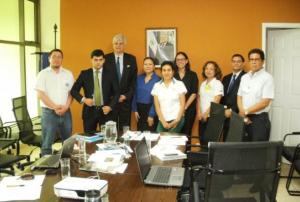
The mission was carried out in San Salvador, El Salvador, between 2 and 4 April 2014 and included meetings with the Director of Civil Protection and staff of this Directorate, official visits to the Ministries of Foreign Affairs, Environment and Natural Resources, Agriculture, Health, and Public Works, as well as to the Environmental Observatory and the National Geographic Institute. In addition, the experts met with representatives of international organizations, the donor community and with students enrolled in the Master’s programme on natural hazards management conducted by the University of El Salvador.

The experts…

more
Publishing date 08/04/2014

On 31 March and 1 April 2014, UN-SPIDER, the Central American Coordination Centre for Natural Disaster Prevention (CEPREDENAC) and Secure World Foundation joined forces to conduct an expert meeting focusing on the use of space-based information in national early warning systems, with a particular focus on droughts.

The meeting, which took place in San Salvador, El Salvador, brought together more than 30 experts from North, Central and South America, as well as from the Dominican Republic. Experts used the opportunity to identify strategies to institutionalize early warning systems operated at the national level, to identify strategies to incorporate the use of space-based applications in such systems, as well as to incorporate inputs from local communities exposed to large events such as hurricanes, floods and volcanic eruptions.

At the request of the National Civil Defense Directorate of El Salvador, UN-SPIDER will also carry out a Technical Advisory Mission in the…

more
Publishing date 01/04/2014

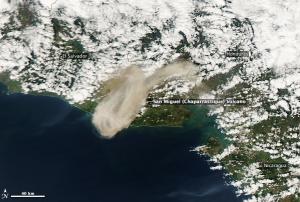
On Sunday morning, 29 December 2013, Chaparrastique volcano in eastern El Salvador (San Miguel) erupted forcing thousands of people to leave their homes. Everyone within a 3km (2 mile) radius had to be evacuated, as BBC reported. The ashes were blown more than 71 kilometers (44 miles) downwind, as this natural color satellite image captured by the Moderate Resolution Imaging Spectroradiometer (MODIS) on NASA's Aqua satellite shows.

Volcanologist Francisco Barahona, as elsavador.com quoted, suggested that this explosive eruption was caused by water vapor pressure. NASA

more
Publishing date 31/12/2013